top of page

Architectural Informatics Lab
Yasushi Ikeda Laboratory
Discrete crowd behavior in architectural spaces
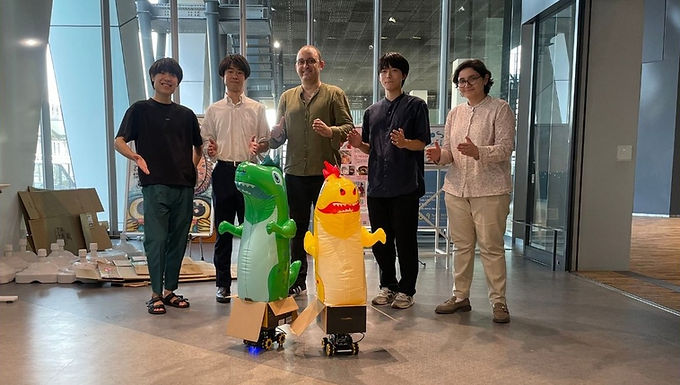
Human Sakura agents face ethical, performance, and scalability challenges, prompting the use of robotic visitors—socially present, mobile entities that influence through presence rather than instruction. Operating under experimental control and ethical transparency, they offer four advantages: real-time adaptability to changing conditions, feasible crowd experience improvement without infrastructure, efficient space utilization by activating underused areas, and rich behavioral data from embodied perspectives unavailable to passive surveillance systems.
bottom of page